Victorian Wallpaper
1780 – 1920
Pattern on the wall - a century of printed wallpaper design
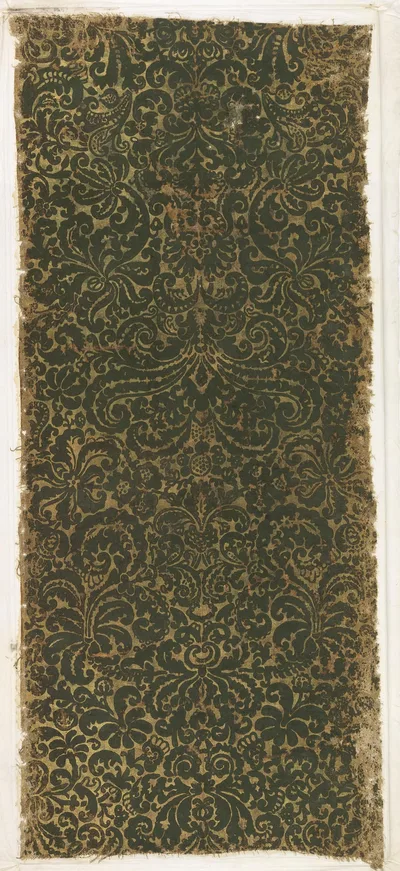
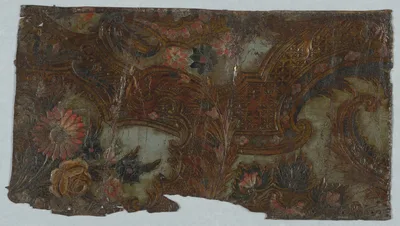
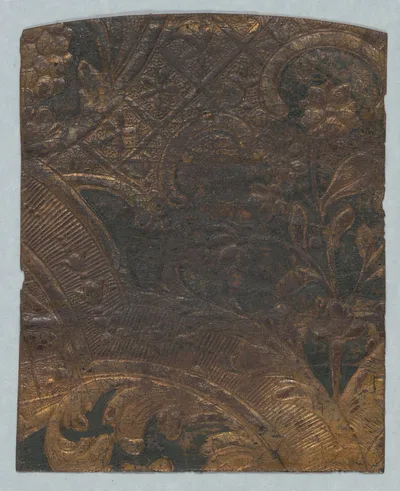
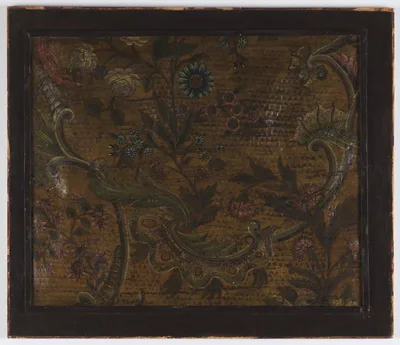
Wallpaper began as a cheaper stand-in for tapestry, painted cloth and stamped leather. By the eighteenth century workshops in England and France were printing paper with carved wooden blocks, one colour at a time, and pasting the sheets together to cover a wall. The work was slow and the product expensive, so for generations papered walls belonged mostly to wealthy households. French makers in Paris and Alsace raised the craft to great sophistication, and the long scenic and arabesque papers they produced in the years around 1800 are still counted among its finest achievements.
Industry changed the trade in the 1830s. A Frenchman, Louis-Nicolas Robert, had patented a machine for making paper in continuous rolls in 1799, and once rolls of paper were available, printing them by machine was the obvious next step. In 1839 the Lancashire firm of Potters of Darwen was granted a patent for a roller printing machine adapted from calico printing, and cylinder-printed papers soon sold by the mile at a fraction of the price of hand-blocked ones. In the United States, firms such as M. H. Birge & Sons of Buffalo and S. A. Maxwell & Co. of Chicago built large businesses on this technology in the later nineteenth century. Cheap production meant that a printed paper could reach ordinary parlours, bedrooms and hallways.
That abundance brought a crisis of taste. Early machine papers often piled up shaded roses, ribbons and architectural trompe l'oeil in a way reformers found dishonest, and by the 1840s critics were attacking patterns that pretended a flat wall was a modelled surface. The Great Exhibition of 1851 put industrial design on public display and sharpened the argument. Owen Jones's Grammar of Ornament (1856) offered designers a worldwide catalogue of flat, stylised pattern, and William Morris's firm began issuing wallpapers in 1864. Over the next generation manufacturers on both sides of the Atlantic sold the Aesthetic taste for dados, fillings and friezes, Anglo-Japanese motifs, embossed papers and mica-flecked grounds.
By 1900 wallpaper was a mature mass-market industry, and Art Nouveau and Edwardian designs were already moving away from the dense, layered Victorian room. The archive's span, 1780 to 1920, covers this whole arc, from the block-printed luxury paper to the roll-fed commodity.
A Career in Images
"Have nothing in your houses that you do not know to be useful, or believe to be beautiful."
— Victorian Wallpaper