Victorian Wallpaper
1780 – 1920
Pattern on the wall - a century of printed wallpaper design
About Victorian Wallpaper
Wallpaper began as a cheaper stand-in for tapestry, painted cloth and stamped leather. By the eighteenth century workshops in England and France were printing paper with carved wooden blocks, one colour at a time, and pasting the sheets together to cover a wall. The work was slow and the product expensive, so for generations papered walls belonged mostly to wealthy households. French makers in Paris and Alsace raised the craft to…
Read full biography →From the Collection
Notable Works
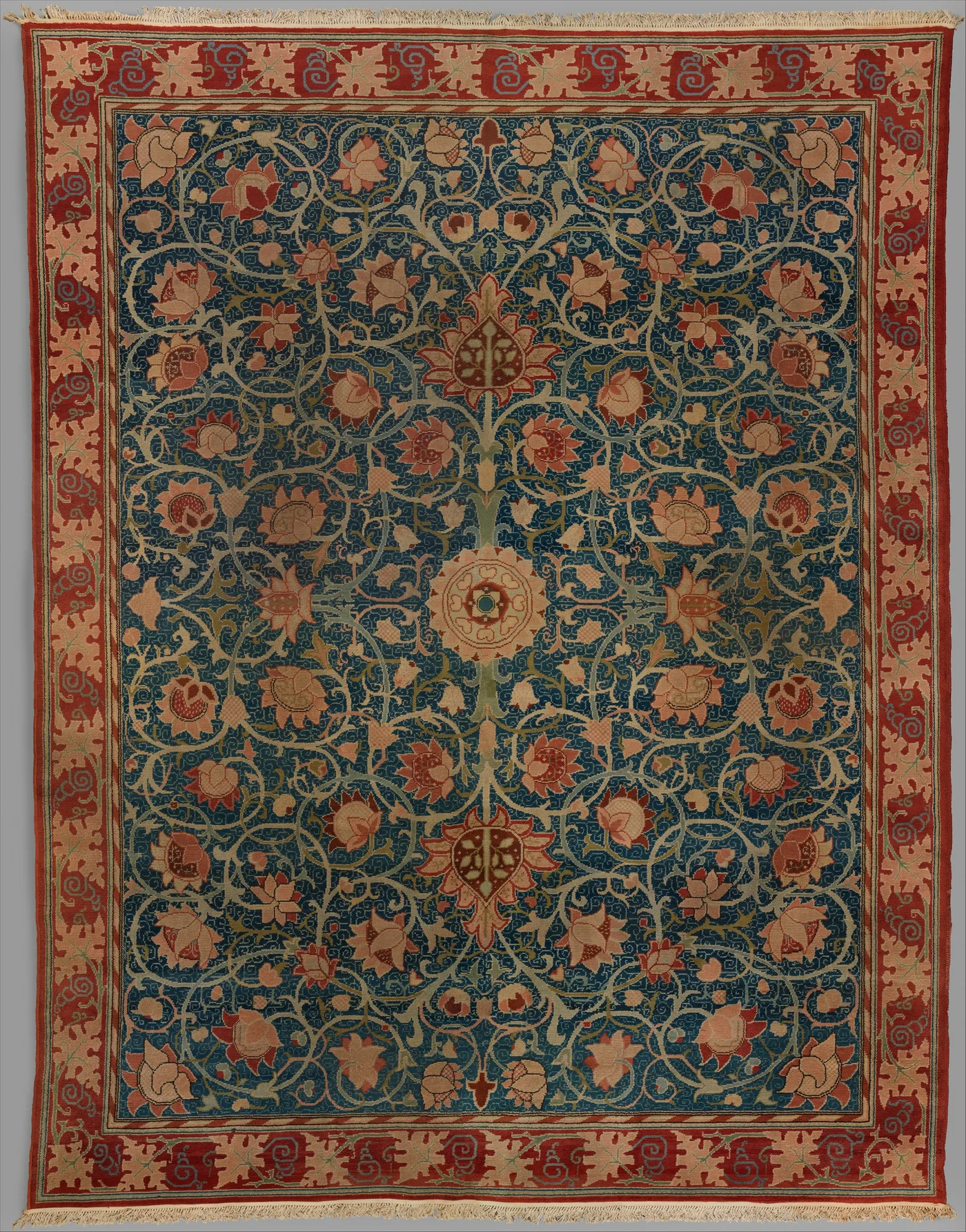
Trellis (William Morris)
Morris designed Trellis in 1862 and the Victoria and Albert Museum records its registration in February 1864; it was printed by the firm of Jeffrey & Co. The pattern was inspired by the rose…
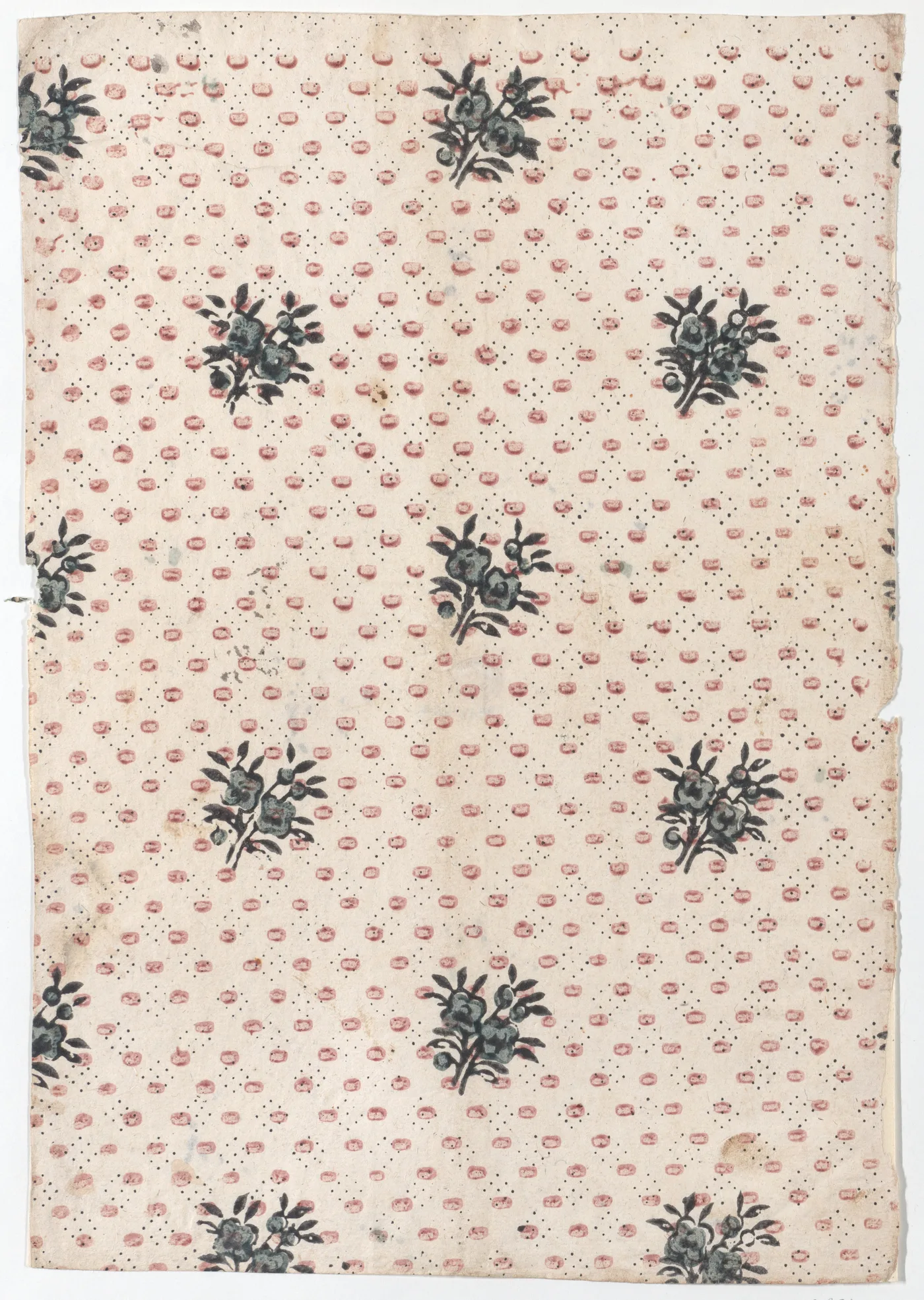
Browse the collection →Daisy (William Morris)
Registered at the same time as Trellis, Daisy is a simple scattered meadow pattern of small flowers and grasses, and was among the first Morris wallpapers to be issued. Its flat, unshaded drawing…
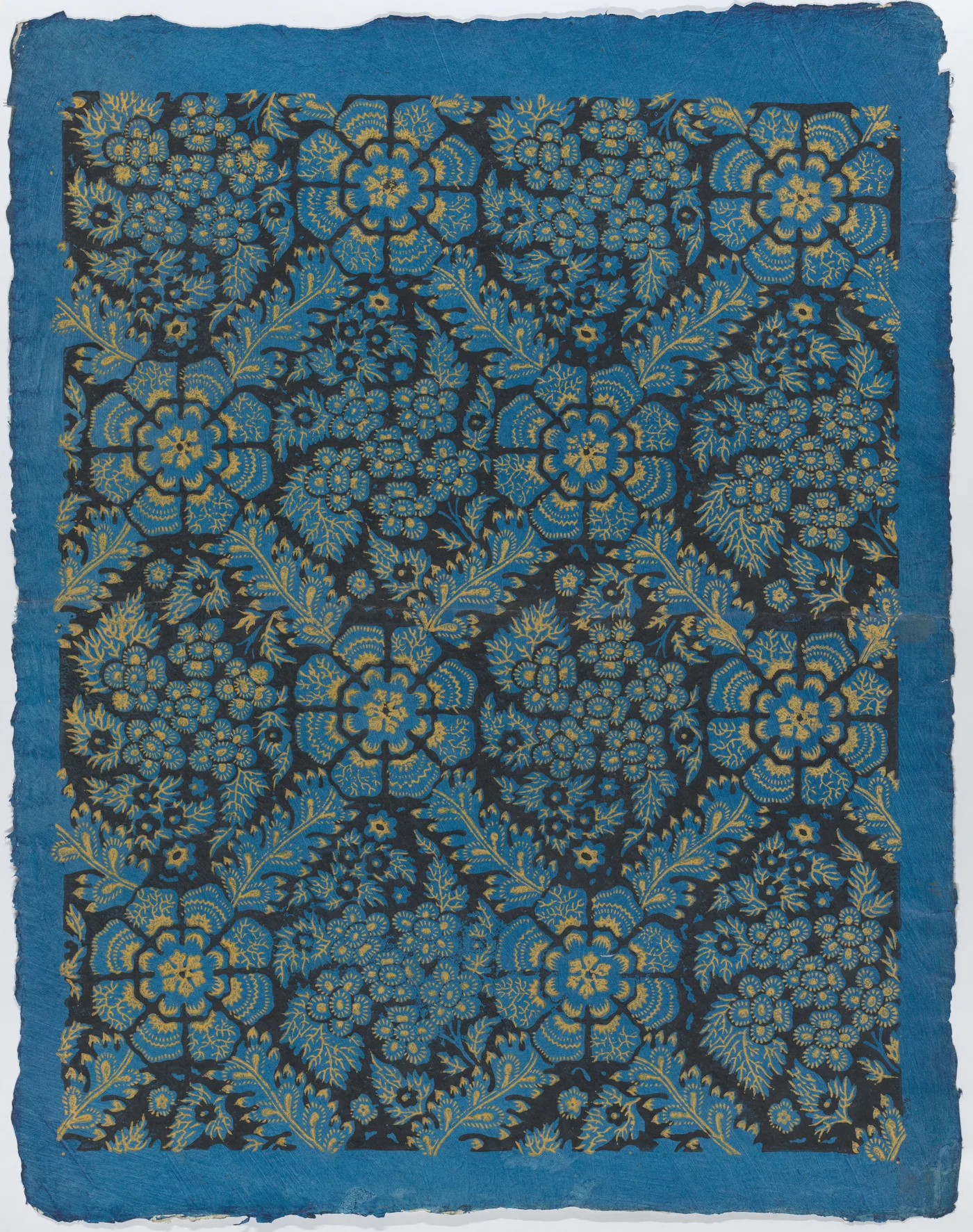
Browse the collection →Fruit (Pomegranate) (William Morris)
Designed by Morris and issued in the mid-1860s, Fruit, also called Pomegranate, combines fruit, leaves and branching stems in a large, dense repeat. It is a good example of Morris's argument that a…
Browse the collection →Timeline
Louis-Nicolas Robert patents a machine for making paper in continuous rolls, a precondition for later roll-printed wallpaper
Zuber & Cie of Rixheim introduces the scenic panorama Vues d'Amerique du Nord
Potters & Ross of Darwen, Lancashire, patent a roller printing machine for wallpaper, per the Victoria and Albert Museum
A. W. N. Pugin publishes True Principles of Pointed or Christian Architecture, criticising ornament that imitates relief on flat surfaces
The Great Exhibition at the Crystal Palace in London puts industrial design before millions of visitors and fuels the design-reform debate
"Have nothing in your houses that you do not know to be useful, or believe to be beautiful."
— Victorian Wallpaper